
Propane vs Butane: What’s the Difference and Which Should You Choose?

If you use bottled gas for heating, cooking, camping or business use, you’ve probably come across two main options: propane and butane. At first glance they can seem interchangeable, but in practice they behave very differently — especially in the UK climate.
Choosing the right one isn’t about which is “better”. It’s about what you’re using gas for, where you’re using it, and the conditions it needs to work safely and reliably.
In this guide, we’ll explain the difference between propane and butane in clear, practical terms, look at the most common UK use cases, and help you decide which gas is right for your needs.

Quick Answer: Propane or Butane — Which One Is Right for You?
If you want the short version, here’s a simple rule of thumb:
Propane is usually better if you:
Use gas outdoors
Need year‑round reliability, including in winter
Use gas for home or space heating
Need a consistent supply for trade or business use
Butane is usually better if you:
Use gas mainly indoors
Need a lighter, more compact bottle
Use gas seasonally or during warmer months
Power portable appliances like cookers or small heaters
Both gases are safe and widely used in the UK — the key is matching the gas to the job.
👉 You can explore both options on our Bottle Types page.
What Is Propane and What Is Butane?
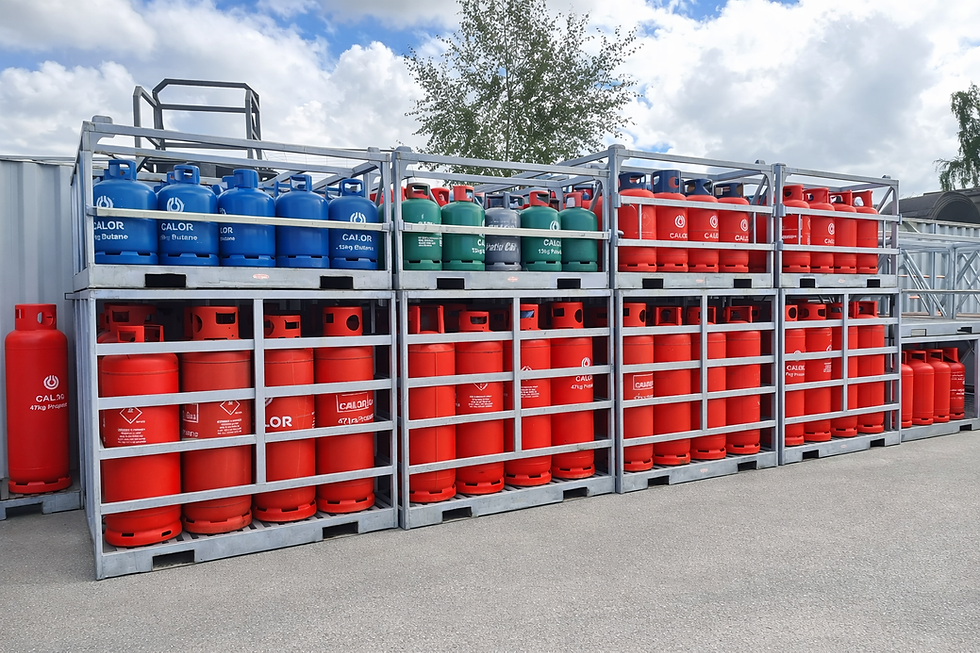
Propane and butane are both types of Liquefied Petroleum Gas (LPG). They are stored as liquids under pressure inside gas bottles and turn back into gas when released to power appliances.
Although they’re closely related, they behave differently, especially in cold weather.

What Is Propane?
Propane is an LPG that continues to vaporise and work effectively even at very low temperatures. This makes it reliable in British weather.
Propane is most commonly:
Stored outdoors
Used for heating, cooking and hot water
Found in rural or off‑grid properties
Used for commercial and industrial applications
It’s available in a range of bottle sizes, including larger cylinders for higher or continuous demand.

What Is Butane?
Butane is also an LPG, but it stops vaporising when temperatures drop close to freezing. For that reason, it’s more suitable for warmer conditions and indoor use.
Butane is most commonly:
Used indoors
Chosen for portable appliances
Used for summer camping and leisure
Supplied in smaller, lighter bottles
It’s popular where space and portability matter. See more options on our Bottle Types page.
Key Differences Between Propane and Butane
The table below highlights the practical differences most customers need to know.
Feature | Propane | Butane |
Cold weather performance | Works reliably in freezing temperatures | Stops working near 0°C |
Typical storage | Outdoors | Indoors |
Bottle size options | Small to very large | Usually smaller |
Weight | Heavier | Lighter |
Pressure | Higher | Lower |
Common uses | Heating, caravans, commercial use | Cooking, indoor heaters, camping |
These differences explain why one gas may work perfectly in one situation but fail in another.
Propane vs Butane for Home Heating
For home heating, propane is usually the preferred choice in the UK — particularly for rural or off‑grid properties.
Why Propane Is Commonly Used for Heating
It continues to vaporise in cold weather
It provides a consistent pressure supply
It can cope with long periods of use
Bottles and bulk options suit higher demand
Heating systems often run outdoors or in unheated areas. In these conditions, butane may struggle or stop flowing altogether, particularly during winter.
Where Butane May Be Used
Butane can sometimes be used for:
Small indoor heaters
Well‑ventilated indoor environments
However, it’s generally less suitable for primary heating in the UK climate.
Key takeaway:If heating is essential — especially in colder months — propane is usually the safer and more reliable option.
Propane vs Butane for Camping, Caravans and Motorhomes
Caravans and motorhomes are one area where both gases are commonly used, often at different times of year.
Propane for Caravans and Motorhomes
Propane is popular with all‑year users because:
It works reliably in winter
Bottles can be stored outside
It supports heating, cooking and hot water
Many winter caravanners choose propane specifically to avoid gas issues during cold nights.
Butane for Summer Touring and Camping
Butane is often chosen for:
Summer camping trips
Portable stoves and cookers
Indoor locker storage
Lighter weight bottles
For fair‑weather camping, butane can be a practical and economical choice.
Many experienced campers switch between propane and butane depending on the season.
Safety Considerations in the UK
Both propane and butane are safe when used correctly, but they do have different storage and safety requirements.
Indoor vs Outdoor Use
Propane is usually stored outdoors because it is heavier than air and stored at higher pressure.
Butane is more commonly used indoors, in appropriate conditions, due to its lower pressure.
Always follow appliance instructions and never store cylinders in unventilated or unsuitable spaces.
Storage and Handling
Keep bottles upright and secure
Store away from heat sources
Ensure good ventilation
Never store gas in basements or below ground
For more guidance on safety and storage check out our blog "How to Store Gas Bottles Safely at Home, in Sheds or Caravans"
Regulators and Compatibility
Propane and butane use different regulators. Swapping gases without changing the regulator can be dangerous and may damage appliances.
Still Unsure Which Gas You Need?
Choosing the right gas isn’t about picking a winner — it’s about choosing what’s safest, most reliable and most suitable for how you use it.
If you’re unsure which gas bottle is right for your home, caravan or business:
Still unsure? Speak to our team. We’re always happy to help you choose the right bottle for your needs and make sure you’re set up safely.
Alternatively, you can ORDER GAS ONLINE


Comments